LiSnowNet: Real-time Snow Removal for LiDAR Point Clouds
Ming-Yuan Yu · Ram Vasudevan · Matthew Johnson-Roberson
TL;DR
An unsupervised convolutional network removes snow from LiDAR point clouds 52x faster than prior methods, with better de-noising and usable mapping.
BRIEF
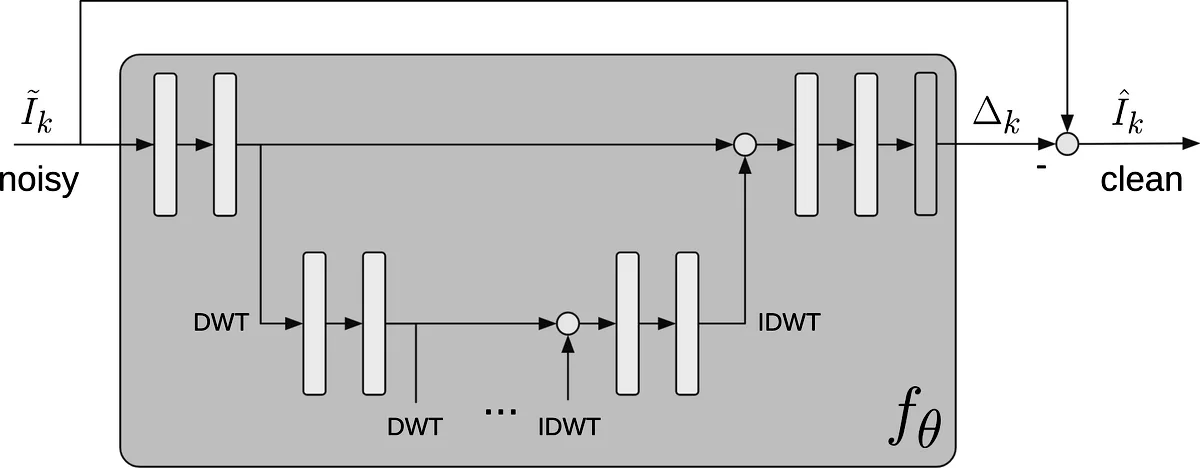
Snowfall corrupts LiDAR point clouds with spurious returns, which degrades downstream tasks such as mapping. Existing snow filters rely on nearest-neighbor search, which does not scale to modern sensors that capture 100k or more points at 10 Hz. LiSnowNet is an unsupervised de-noising method built on a deep convolutional neural network, so it runs easily on GPUs. It runs 52 times faster than state-of-the-art methods with better de-noising performance, and the authors show it supports mapping from corrupted scans.
Abstract
Light Detection And Rangings (LiDARs) have been widely adopted to modern self-driving vehicles, providing 3D information of the scene and surrounding objects. However, adverser weather conditions still pose significant challenges to LiDARs since point clouds captured during snowfall can easily be corrupted. The resulting noisy point clouds degrade downstream tasks such as mapping. Existing works in de-noising point clouds corrupted by snow are based on nearest-neighbor search, and thus do not scale well with modern LiDARs which usually capture 100k or more points at 10Hz. In this paper, we introduce an unsupervised de-noising algorithm, LiSnowNet, running 52 x faster than the state-of-the-art methods while achieving superior performance in de-noising. Unlike previous methods, the proposed algorithm is based on a deep convolutional neural network and can be easily deployed to hardware accelerators such as GPUs. In addition, we demonstrate how to use the proposed method for mapping even with corrupted point clouds.