Parametric Design of Underwater Optical Systems
Gideon Billings · Eduardo Iscar · Matthew Johnson-Roberson
TL;DR
An open-source tool lets engineers explore underwater camera system designs using physical light models, replacing trial-and-error selection of cameras, lenses, housings, and settings.
BRIEF
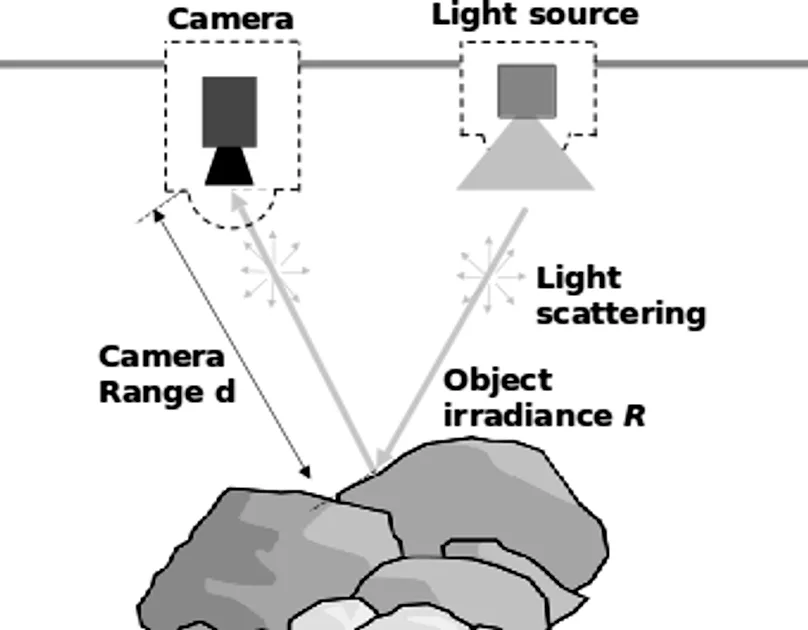
Choosing cameras, lenses, housings, and settings for an underwater vehicle is mostly done by trial and error and the designer's experience, even though each choice affects how well the whole system sees. This work provides an open-source tool for exploring that design space parametrically. It also reviews the main underwater light effects, such as scattering and absorption, and the models used to estimate how the complete imaging system will respond and perform for a given set of requirements.
Abstract
The design of optical systems for underwater vehicles is a complex process where the selection of cameras, lenses, housings, and operational parameters greatly influence the performance of the complete system. Determining the correct combination of components and parameters for a given set of operational requirements is currently a process based on trial and error as well as the specialized knowledge and experience of the designer. In this paper, we introduce an open-source tool for the parametric exploration of the design space of underwater optical systems and review the most significant underwater light effects with the corresponding models to estimate the response and performance of the complete imaging system.